Bacteria Detective
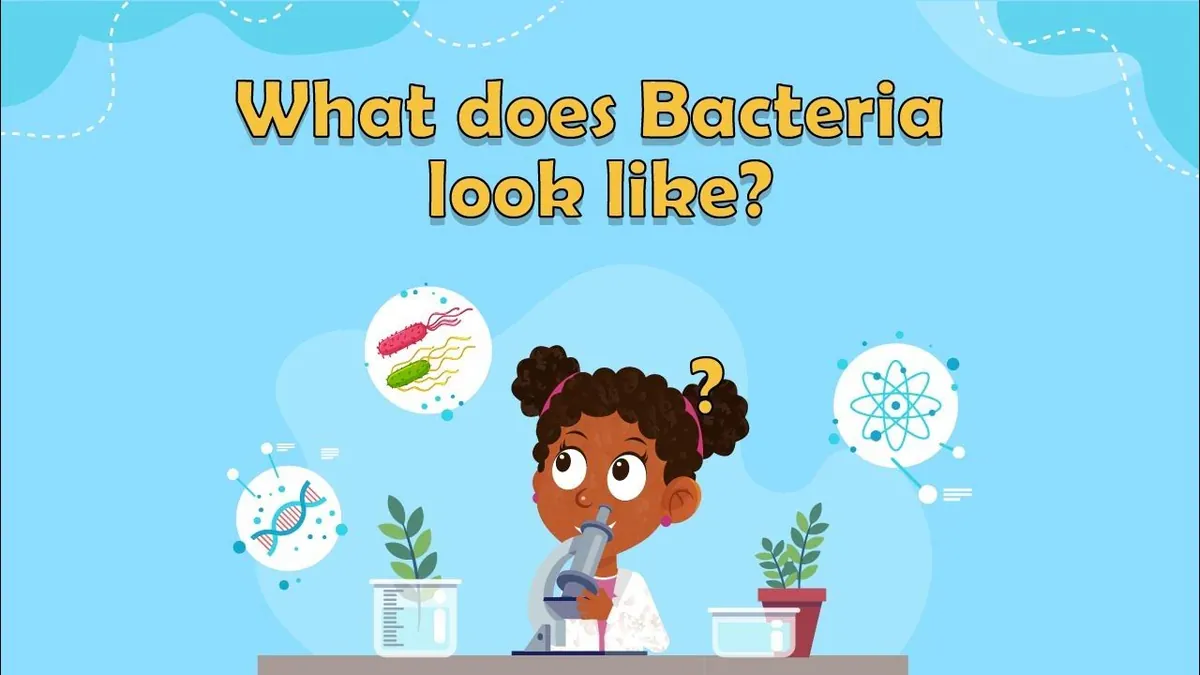
🌟 Introduction to Bacteria
Duration: 5 Sessions
Subject: Science
Main Objective: Students will understand what bacteria are, their characteristics, where they are found, and their roles (both helpful and harmful).
🧪 DAY 1: What Are Bacteria?
Objectives:
- Understand that bacteria are tiny living things (microorganisms).
- Recognize that bacteria come in different shapes and sizes.
Activities:
- Intro Video: Watch a kid-friendly video about bacteria
- Discussion: What are bacteria? Can we see them? Are they alive?
- Bacteria Shape Drawing: Observe bacteria under the microscope and draw your own.
🔍 DAY 2: Where Do We Find Bacteria?
Objectives:
- Understand that bacteria are everywhere.
- Observe how bacteria live on surfaces around us.
Activities:
- Swab the environment:
- Students swab desks, door handles, or hands
- Prediction Map It Out:
- Create a bacteria "hotspot" map of the classroom using stickers or dots.
🦠 DAY 3: Good vs. Bad Bacteria and How Do We Stay Healthy?
Objectives:
- Differentiate between helpful and harmful bacteria.
- Learn how bacteria help in digestion, making food, and decomposing.
- Learn how bacteria spread and how to protect ourselves.
- Understand the importance of hygiene and handwashing
Activities:
- Bacteria Heroes and Villains: Read a short story or watch a video.
- Sort Game:
- Use cards with pictures (e.g., yogurt, strep throat, compost) and have students sort into “Good” and “Bad” bacteria columns.
- Handwashing Experiment
🧫 Day 4: “E. Coli vs. Staph – Know Your Bacteria”
Objectives
- Identify E. coli and Staph as common bacteria
- Compare where they are found, how they spread, and what illnesses they cause
Activities:
Hook – "Guess the Germ":
- Examine E. coli and Staph under a microscope.
- Ask: “Which one might be on your skin?” “Which one might be on raw meat?”
E. Coli vs. Staph Basics:
discuss:
| Feature | E. coli | Staph |
| Found in | Intestines, raw meat | Skin, nose |
| Can cause | Food poisoning | Skin infections |
| Spread by | Dirty hands, undercooked food | Touching cuts, dirty hands |
| Looks like | Rod-shaped | Round, grape-like clusters |
Video–video explaining these germs
Wrap-up Discussion
What surprised you about these bacteria?
Which one do you think is easier to avoid?
🎨 DAY 5: Bacteria Detective
Objectives:
- Review what we learned about bacteria.
- Demonstrate understanding through art and identifying bacteria.
Activities:
Bacteria Comic Strip or Poster:
- Students create a comic or poster showing “A Day in the Life of a Bacterium.”
Detective:
- Identify an unknown bacterium through gram staining and observing under the microscopic. Plus, facts about where you can find it.
Instructors
Crystal Bradley
Contact us
- Organizer
- cr••••y@gma••••l.com
Location
Classifications
Age Groups
- Youth
Levels
- Level 1