
Integrated Science | Grades 2-5 | Fridays | Semester (FILLMORE)
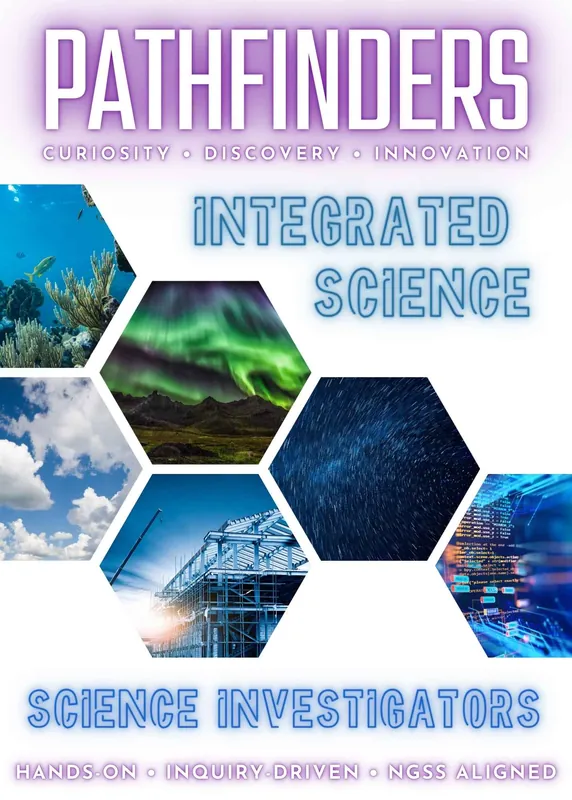
Science Investigators: Discovery (Grades 2-5)
Days: Fridays
Time: 11:05-12:00
Location: Fillmore Library (502 2nd St, Fillmore, CA 93015)
Program Description:
Science Investigators is a hands-on, integrated science program designed for curious learners in Grades 2–5. Through authentic investigations, engineering design challenges, and collaborative problem-solving, students learn how scientists make sense of the natural world while developing critical thinking, creativity, and scientific reasoning.
Rather than learning science through lectures or worksheets, students learn by investigating real-world questions and phenomena. Each class invites students to observe carefully, ask questions, collect evidence, analyze patterns, develop explanations, and test ideas through hands-on investigations. Students may record observations in their Field Journal, build scientific models, engage in thoughtful discussions, and apply what they learn through engineering design challenges.
Together we discover how living things survive, interact, and depend on Earth's systems. Students investigate biodiversity, adaptations, ecosystems, soils, decomposers, weather, forces and motion, engineering design, and biomimicry while discovering how scientists and engineers use evidence to better understand—and improve—the world around them.
Science Investigators is part of a three-year rotating curriculum. Each year introduces new scientific questions, investigations, and engineering challenges, allowing students to continue building scientific knowledge and problem-solving skills without repeating content.
Although students in Grades 2–5 participate in the same investigations, expectations are developmentally appropriate. Younger students receive additional support as they develop scientific thinking and communication skills, while older students are challenged to analyze evidence, construct explanations, design more sophisticated solutions, and support their conclusions using scientific reasoning.
NGSS Alignment
This program is aligned with the Next Generation Science Standards (NGSS) and emphasizes the Science and Engineering Practices, including asking questions, planning and carrying out investigations, analyzing and interpreting data, developing and using models, constructing explanations, engaging in argument from evidence, and designing solutions. Students also strengthen their understanding of important crosscutting concepts such as patterns, cause and effect, systems, structure and function, and stability and change while building foundational knowledge in life science, earth science, physical science, and engineering.
Off-Site Program Note
Because this course is offered at an off-site location, a parent or guardian is required to remain on site for the duration of the class. This helps ensure a supportive and safe learning environment for all students while allowing the class to run smoothly within our shared community space.
Please note that this course is subject to cancellation or postponement based on enrollment.
Tentative Class Outline
Lesson 1: Nature's Sorting Hat
Objective: Classify organisms using observable characteristics.
Primary Focus: Life Science
Lesson 2: Surviving with Adaptations
Objective: Explain how adaptations improve an organism's chances of survival.
Primary Focus: Life Science
Lesson 3: Biodiversity Investigation
Objective: Investigate the variety of living things within a habitat.
Primary Focus: Life Science
Lesson 4: Soil: The Foundation of Life
Objective: Investigate how healthy soils support living organisms.
Primary Focus: Earth Science
Lesson 5: Nature's Recyclers
Objective: Explore how decomposers recycle matter within ecosystems.
Primary Focus: Earth Science & Life Science
Lesson 6: Habitat Mapping
Objective: Analyze habitat features and environmental conditions that influence where organisms live.
Primary Focus: Earth Science
Lesson 7: Forces & Motion
Objective: Investigate how balanced and unbalanced forces affect motion.
Primary Focus: Physical Science
Lesson 8: Structures & Stability
Objective: Design and test stable structures inspired by nature.
Primary Focus: Engineering & Physical Science
Lesson 9: Biomimicry
Objective: Apply ideas from nature to solve engineering challenges.
Primary Focus: Engineering
Lesson 10: Weather, Water & Wildlife
Objective: Investigate how weather and water influence living systems.
Primary Focus: Earth Science
Lesson 11: Food Webs
Objective: Model how energy and matter move through ecosystems.
Primary Focus: Life Science
Lesson 12: Engineering for Wildlife
Objective: Apply science and engineering to design a solution that helps wildlife thrive.
Primary Focus: Integrated Science & Engineering
*This outline is subject to change as investigations evolve and student interests guide inquiry.
Contact us
- Michelle La Monte
- he••••o@pat••••s.academy
Location
Classifications
Categories
- Teacher Led STEAM