
Make a Krenov-Style Wood Body Plane
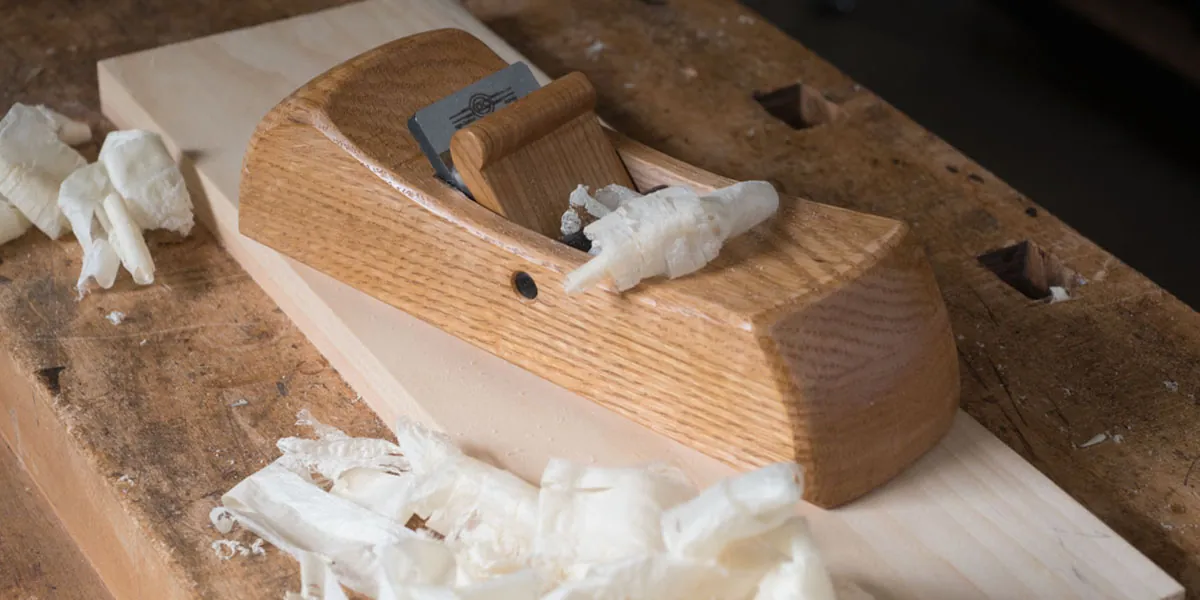
These fine wooden planes were made popular by the studio furniture maker James Krenov. The books Krenov wrote inspired a generation of furniture designers and makers and introduced the public to hand crafted furniture as functional art. His writing, in a voice distinctly his own, is both simple and modest, filled with the romance of hand craft as well as practical advice. The photos in his books showcase his beautifully designed furniture created with the highest standards of the woodworker’s craft. They show him making and using these wooden planes, now known as Krenov-style planes.
James Krenov was the founder of the College of the Redwoods Fine Furniture Program where the first lesson students learned was how to make these planes. Later the school changed its name to The Krenov School.
The goal of this class is for every student to go home with a working plane and the knowledge to build other Krenov-style planes. My wish is to see you discover the joy of using these planes as I discovered when I made my first Krenov-style plane some 50 years ago.
A Custom Designed Kit for This Class
Students will be provided with all the basic parts of a Krenov-style smoothing plane; a hardwood plane blank, with the side cheeks and core thicknessed to size. A 1-¾ “ wide Hock blade assembly and a precision-machined cross pin, a hardwood wedge, and ¼” dowel pins for indexing.
A set of plans to refer to and to bring home, helpful for making additional planes, and a procedure checklist will also be provided.
What You’ll Learn
You will learn how these planes can be used, whether you are a hand tool woodworker or you would like a fine smoother for surface prep. You'll see a live demonstration highlighting the use of Krenov-style planes with class participation.
A short review of the building process with emphasis on the key points to get right will be presented.
There will be plenty of opportunities to practice hand skills, assembling, adjusting and fine-tuning these planes. Sharpening will be thoroughly covered. At the end of the class we will practice using our new planes.
Tools Used
Power tools used in the class:
- A table saw to safely cut the ramp and escapement with a custom cross sled,
- a band saw to cut the core apart, cut the cove in the escapement and rough shape the plane at the finish,
- the drill press to drill the holes for the cross pins, and
- a palm router with a jig to mill the slot for the cap iron screw.
Hand tools used in the class:
- hand planes block planes and smoothers; bring your own or use the instructor’s and get a little hands on practice on a Krenov-style plane
- Files and rasps
- Clamps for glue up
While we’re excited to have you learn to use these tools, we understand that not everyone will be comfortable with everything we do in the shop. If you don’t feel good about making a particular cut or maneuver, just let us know - we’re happy to help!
Skill Level & Prerequisites
Beginner to Advanced
This class is designed to run smoothly, no need to rush. The tasks assigned to students are within the reach of beginners but offer a few challenges such as using hand planes.
Ages 16+; minors are required to be accompanied by an adult.
Schedule
Day One: 7 hours, with a break for lunch
Day Two: 4 1/2 hours, with a break for lunch
The class will take one and a half days. I will be available in the afternoon of the second day to assist with any students that need further help. At the end of the first day the planes will be glued up. The next morning they will be ready, with a little more work, to test drive. The remainder of the second day will be devoted to fine-tuning and shaping the planes as well as practicing planing with scrap wood. It is expected that the final shaping and sanding will be handled later by each student on their own.
Safety
PPE: We provide safety glasses, hearing protection, and dust masks if requested. Safety glasses are required in the shop at all times.
Dress: We’re probably going to get a little dusty! Make sure to wear sturdy, closed-toed shoes. Avoid loose clothing and jewelry. Anything that may get caught in machinery, like long hair, must be tied back and secured.
Accommodations: While we’ll be moving about the shop for most of our time together, we aim to make the craft as accessible as possible for everyone. Please reach out if you have any questions about our space or may need accommodations of any kind.
What to Bring
If you have a favorite tape measure or pencil, bring it along. Also helpful, but not required, are files and rasps for shaping and planes for smoothing. Otherwise, we’ve got you covered!
We’ll be on our feet for most of the class, so it might be good to bring something to drink and a light snack. Don’t worry, we’ll take a break too!
For lunch, feel free to bring your own or grab something tasty at one of our local eateries.
Instructor Bio - John Hartman
I have been a self-employed craftsman and artist for most of my life. I studied drawing and painting in high school traveling on weekends to the Art Student League in New York. Later I attended the New York Studio School and the Kansas City Art Institute, where I met my partner Christine.
Next door to the art institute was the Missouri Music Conservatory where I studied the piano and music theory as an elective.
When we moved to New York I found myself laid off from UPS and thankfully I took the opportunity to study piano tuning and repair at the Manhattan School of Music.
I have always been interested in woodworking and music so eventually I found myself living in the Hudson Valley where Christine and I founded a business to rebuild grand pianos. This lasted 30 years. When I closed the shop, I turned to combining my interest in woodworking and drawing. So I became a technical illustrator.
Fast forward and now I am working as a freelance illustrator helping to create drawings for Fine Woodworking Magazine.
Instructors
John Hartman
Contact us
- Saratoga Joinery
- in••••o@sar••••y.org
Location
Classifications
Categories
- Class
Levels
- All