
Stained Glass: Came Lead - Level 2 - Sundays - 6 Sessions - 97G
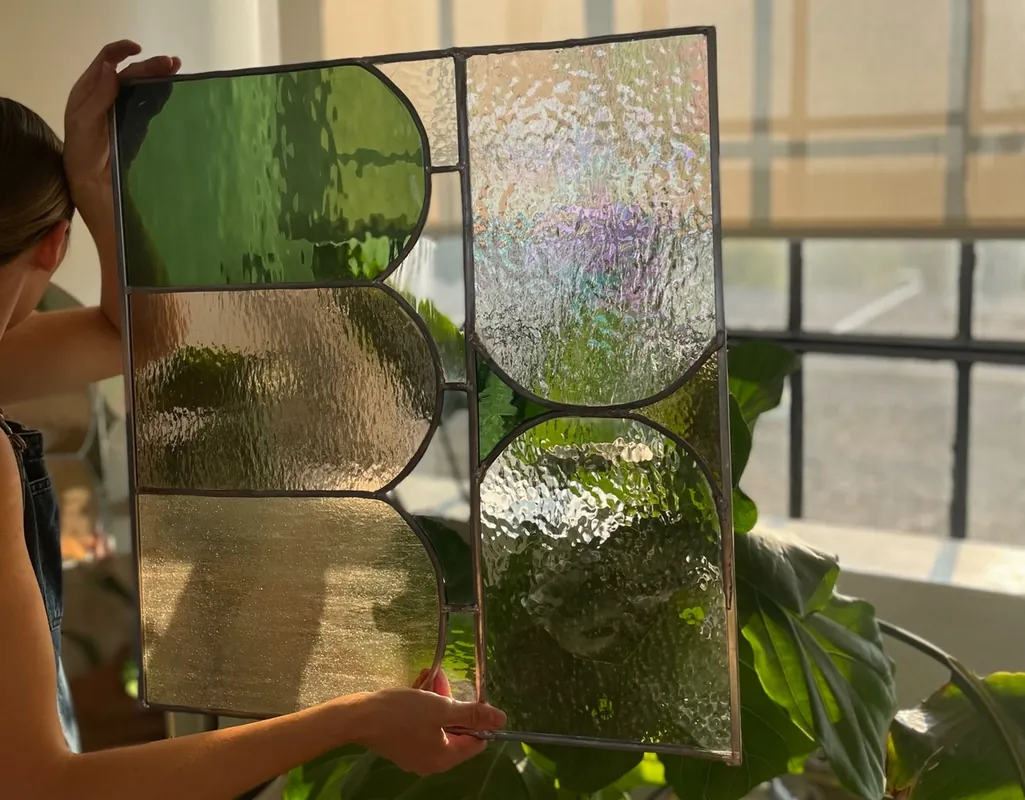
Take your stained glass practice to the next level! This six-week course introduces students to the traditional art of came lead stained glass, opening the door to larger-scale panels, architectural applications and more ambitious designs.
Building on the skills learned in our introductory Tiffany-style stained glass classes, students will design and create a substantially larger stained glass panel using traditional lead came construction. You'll learn how to design specifically for came, work with different lead profiles, use our studio's came lead stretchers, accurately cut and fit glass, construct and reinforce larger panels, solder lead joints, cement and professionally finish your work.
Because came construction allows us to work bigger—up to 16"x24" in this class, we'll also begin thinking about stained glass as part of the built environment. We'll explore how stained glass can be incorporated into windows, doors, transoms, cabinetry and other architectural spaces, along with some of the considerations that come with designing a piece for an existing opening.
In our final class, we'll introduce some basic DIY installation principles to help demystify what happens after your stained glass panel leaves the workbench. We'll look at a few common and approachable installation methods, working with wood trim and stops, basic measuring and fitting, and an introduction to useful hand and power tools. We'll also demonstrate the general process of creating a simple opening for stained glass, such as a door cutout.
This portion of the course is intended as an introduction rather than comprehensive installation training—every home, opening and stained glass project is different! Our goal is to give students a foundation for understanding how stained glass can be installed, greater confidence around basic tools and terminology, and a starting point for bringing future projects into their homes and spaces.
Over six weeks, you'll learn:
- Traditional came lead stained glass construction
- How to use came lead stretchers and specialized lead-working tools
- Designing larger panels for strength and stability
- Cutting, fitting and assembling glass within lead came
- Lead profiles, perimeter came and reinforcement
- Soldering came joints
- Cementing, cleaning and finishing
- Considerations when designing for windows, doors and architectural openings
- An introduction to common DIY installation methods
- Basic measuring, wood trim and tool familiarity
- When an installation may require additional professional support
Experience Level
This is a Level 2 stained glass course intended for students who already have foundational stained glass experience. Students should be comfortable cutting and grinding glass and have previously completed a Tiffany/copper foil stained glass course or have equivalent experience.
Materials
All required materials and use of specialty studio tools are included in the course fee. Came lead projects in this course are considerably larger than projects in our introductory stained glass classes, giving students the opportunity to work with more glass, lead and structural materials while developing the skills needed for larger-scale work.
Come ready to think bigger—we'll take your stained glass practice beyond copper foil and introduce you to the possibilities of traditional leaded glass.
Common Questions & Important Info
Accessibility
This class is located in our beautiful main floor Classroom B, filled with natural light and expansive window banks. This space is accessible by both stairs and ramp.
We understand that accessibility looks different for everyone. If you have questions about access needs or would like to discuss whether this class will be a good fit for you, we warmly encourage you to reach out to us in advance so we can offer clarity and support where possible.
Minimum age / Can I register my child for this class?
Due to the complexity of the projects and specialized materials and techniques involved, the minimum age requirement for this class is 18 years of age.
Workshop is a mature environment where there are very hot kilns in unrestricted production areas; mature art that can contain challenging matters such as profanity, nudity, and mature & challenging subjects; responsible consumption of legal substances such as alcohol in both common areas and private studios, and marijuana outdoors; and lively discussion that is not censored for young ears.
What should I bring?
If you have your own safety glasses, please bring them to class! We will be supplying all the basic tools that you require. We will provide more than enough glass to get you started, but additional glass is available for purchase if you require more.
What should I wear?
Wear comfortable clothing! We recommend long hair be tied back and jewelry be removed before class begins.
What about health and safety?
Safety is a top priority in our glass studio. Safety glasses are required (and provided), and each participant in the class is required to keep all surfaces clean, including their workstation, thoroughly before they leave. This is to minimize any risks caused by touching & breathing glass dust.
Our stained glass classes use lead-based solder, which is standard in traditional stained glass practice. Non-leaded solder options are available for students who prefer them, although leaded came will be used in this class, and a substitute is unavailable; please let your instructor know if you wish to use lead-free solder. Our experienced instructors follow all relevant safety guidelines and will provide thorough demonstrations and instructions on safe handling, ventilation, cleanup, and personal protective equipment. Please note that lead solder is only used in our stained glass classes and not in glass fusing.
Practice Hours
All classes include 1 free hour of practice time before and after class (non-mandatory). Students may stay beyond 1 hour after class, provided the equipment is not needed by our members or another class. We also welcome you to come in throughout the week for practice hours if you desire, but ask a few things of you:
- Please be finished and have cleaned up your area at least one hour before the next class starts.
- Practice hours are not available while other classes, workshops, or events are scheduled in the space.
The class calendar can be found here.
Cleanup
Classrooms must be left in a clean condition. Students are responsible for following Workshop’s cleaning protocols, provided & demonstrated in class.
Outside Materials
Students are not allowed to bring glass or other materials purchased elsewhere into class. Additional glass can be purchased from Workshop if needed.
Cancellations
Classes cancelled within 72h of the start date are subject to refunds only if a replacement is found for your signup. Classes cancelled anytime prior to 72h from the start date are subject to a 5% cancellation fee to cover our processing fees. Classes are subject to cancellation by Workshop in the case of low enrolment. If classes are cancelled by Workshop, you will receive a full refund, including processing fees.
If I miss a class, can I make it up another time?
We are unable to offer make-up classes. For students who know in advance that they will be missing a class, we encourage them to check in with their instructor ahead of that absence to know what they will be missing and how to be on track for the following week by putting in some additional practice hours.
What about Workshop being a safer space?
Everyone has the right to feel safe and included at Workshop Studios regardless of age, ancestry, colour, family status, gender identity, gender expression, marital status, mental disability, physical disability, place of origin, race, religious beliefs, sexual orientation or source of income.
Workshop Studios does not tolerate abusive or discriminatory behaviour. Such behaviour is grounds for removal from the studio and may result in the cancellation of future registrations or a permanent ban.
UNACCEPTABLE BEHAVIOR
Any harassing behaviour which creates an intimidating, hostile, or offensive environment is unacceptable conduct. Harassment includes, but is not limited to:
- Verbal behaviour: Jokes, slurs, derogatory remarks, abusive language
- Physical & visual: Unwanted touching, staring, filming or photographing
- Visual displays: Derogatory items, posters, photographs, drawings
- Verbal advances: Any unwanted or unwelcome verbal contact
If you feel you have been subject to any harassment, discriminatory behaviour or other abuse, please contact a Workshop Staff member. All communication is strictly confidential. We will work with you and if needed, with your consent, with an independent mediator to address the issue.
Anyone exhibiting these behaviours can be asked to leave at any time by Workshop staff. By signing up for this workshop, you agree to read and follow our Safer Space Policy.
Instructors
Jennifer Jacoby
Contact us
- Studio Manager
- in••••o@wor••••s.ca
Location
Classifications
Categories
- Art Workshop
- Weekend
- Glass
- Classroom B
Levels
- Level 2