
Rigging Power Systems with James Eade
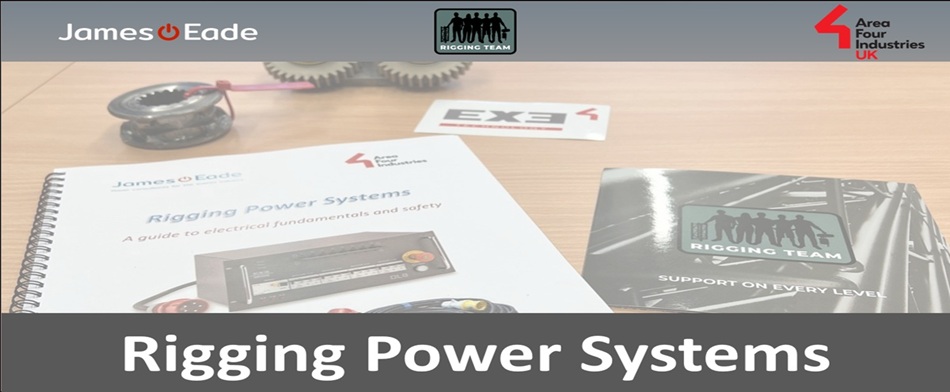
in association with Rigging Team & James Eade
Click Here to see availability and booking details
2 days of intensive practical and theoretical control and power distribution training focused on rigging systems, with commonly used chain hoists and control platforms. Featuring EXE Drive and EXE Rise training equipment.
Suitable for novices as well as those with more experience of Rigging power and control systems.
Course runs 10:00 – 17:00 each day refreshments and a light lunch will be provided
Attendees will be invited to a complimentary meal out after the first day of the course.
Electrical safety in Rigging
Many will have experienced burnt-out contactors, failed windings or unexplained blown fuses. Are they faulty components, or issues from poor electrical design?
What about the risks with different Socapex pin-outs? Do you actually need RCDs on variable speed drives? How often should you ‘PAT test’ your kit? Does BS 7909 apply to rigging? Does it matter how long your rigging multicore cable really is? Why are there always power issues with variable speed drives? What happens if a neutral fails?
For many in the rigging industry, power is a necessary sideline. But the safe and effective operation of motors, winches and similar all rely on effective protection and distribution. Come and find the definitive answers to these questions and more in this training workshop sponsored by Area 4 and hosted by Rigging Team.
Course outline
Basic electrical theory overview/recap: Ohms law and how current, voltage and resistance interact.
Electricity generation and the use of three- and single-phase supplies and the importance of phase balancing.
The methods of protection from shock and overloads
► Practical demonstration: Measuring fault currents and voltage drop.
Essential motor theory: Direct online starting, phase reversal, inverter drives.
Control systems overview; Limit switches, up/down control, E-Stop operation.
► The above based on the EXE Rise suggested wiring schemes.
► Practical look at examples of controller functionality
► Practical look at wiring conventions
► Electrical standards and compliance notes
A basic guide to power quality.
Power measurements – a look at voltage drop and harmonics in demonstration equipment.
A review of electrical legislation and appropriate standards including BS 7671 (the ‘wiring regs’) and BS 7909.
Electrical maintenance and what is required for compliance with legislation.
On-site checks and tests.
On completion of the course candidates will have:
Comprehensive course notes
A numbered certificate of attendance relating to the syllabus above
An appreciation of their legal duties about power systems in automation
A basic knowledge of how to use electrical equipment safely in lifting operations
Trainee requirements:
Minimum 18 years of age on first day of course
Contact us
- Training Admin & Info
- Sk••••b@a4i••••i.com
- +44 (0)1945 410700
Location
Classifications
Levels
- All